
Latest assessment · 6 November 2026
- Dutch C-390 support provides a benchmark for Greek sustainment Fokker’s service-centre role illustrates the specific responsibilities behind a local-support claim.
DOSSIER
The KC-390 agreement changes Greece’s transport and refuelling plans. Aircraft deliveries, fleet availability and fighter compatibility will determine when that change becomes usable capacity.
On 2 November 2026 Greece and Portugal signed the agreement for three Embraer KC-390 aircraft, with options for another three. Embraer’s announcement places the first Greek aircraft in 2027. The Portuguese government describes an approximately €590 million package and scheduled deliveries in 2027, 2029 and 2031. The option aircraft are not part of the firm three-aircraft order.
This is a new acquisition track alongside the existing transport fleet, not evidence that the Hellenic Air Force already operates jet tankers. The defence minister described the purchase as Greece’s first jet transport and aerial-refuelling aircraft programme. That distinction matters for the introduction of a new support system as much as for its flying performance.
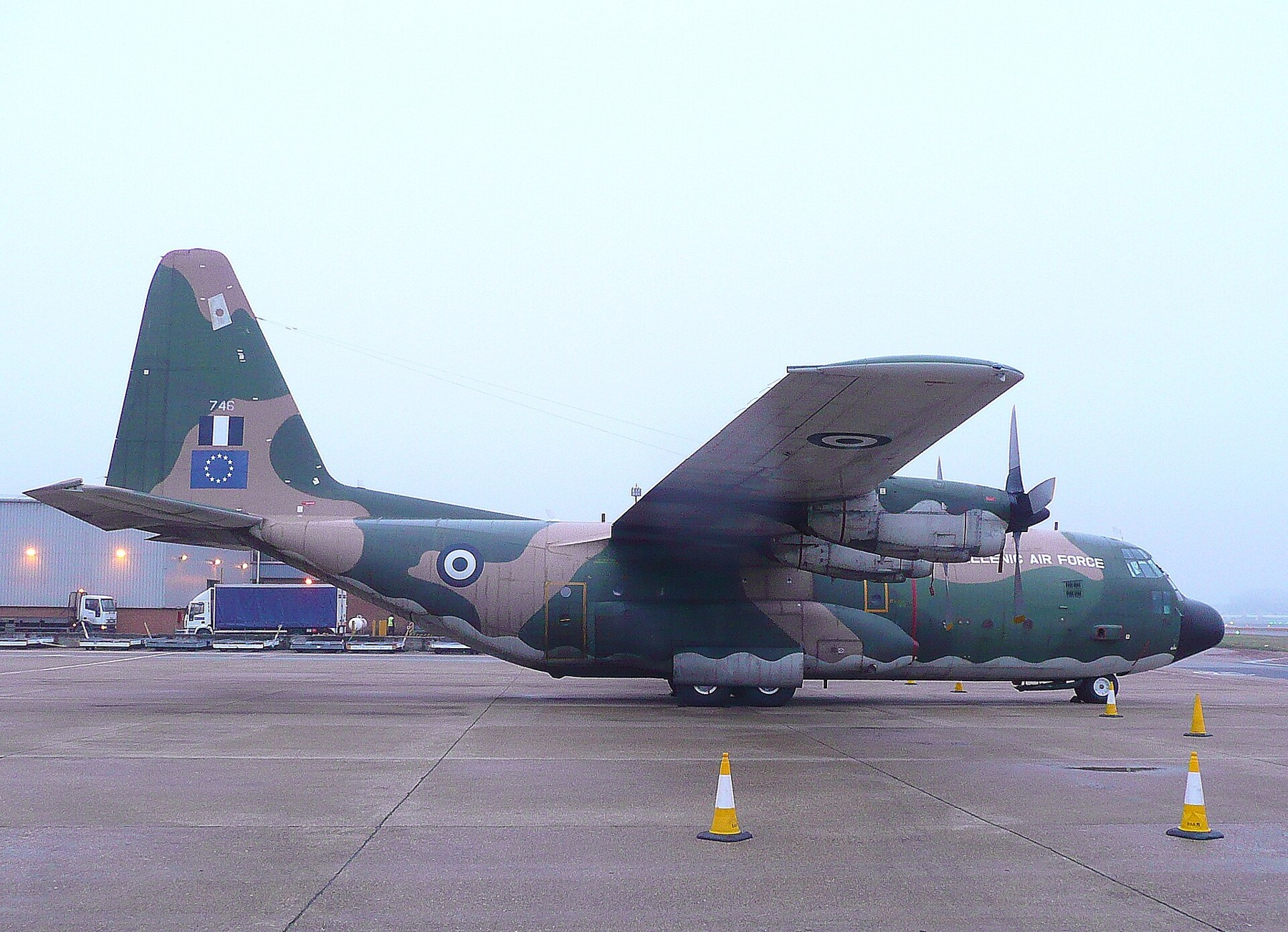
The existing C-130 and C-27J fleets provide the background against which the new programme must be judged. Their usable contribution depends on serviceability, crews, maintenance slots and available mission equipment. A headline fleet inventory does not show how many aircraft can reliably generate missions over a sustained period.
The staggered KC-390 delivery schedule means that acquisition and fleet transition overlap. Greece must sustain current transport tasks while training crews and establishing support for a different aircraft. The commercial opportunity therefore includes both the new programme and work that keeps the existing fleet usable during the transition. This dossier does not infer a current readiness percentage from public fleet lists.
The defence minister said the intended refuelling capability would initially serve Rafale and Mirage aircraft and later F-16s. That is a stated programme intention. The aircraft types do not all use the same receiving arrangement: Rafale and Mirage use probe-and-drogue, while the F-16 normally receives fuel through a boom receptacle. A general description of the KC-390’s tanker role does not establish that every Greek fighter pairing has been technically qualified.
Embraer describes a multi-mission aircraft capable of tanker and receiver roles when appropriately equipped. The relevant Greek evidence will be the contracted configuration, any additional integration work, flight-clearance and certification milestones, and the acceptance of the intended mission. Those requirements need to be followed independently of the transport-aircraft delivery date.
Portugal’s announcement assigns responsibilities around programme oversight, acceptance, training and operational transition. Its stated industrial benefit belongs to Portuguese industry and must not be counted as Greek production. The partnership can provide Greece with an experienced introduction partner; it also makes the division of responsibilities commercially important.
Greek aerospace firms should look for an explicit place in maintenance, ground support, component work, training infrastructure or logistics. Geography alone does not create that place. A funded support arrangement with defined qualification requirements is a stronger opportunity than a general expectation that domestic industry will benefit from the purchase.
The immediate positive evidence is a signed acquisition and a defined first delivery year. The unresolved industrial questions concern the Greek support model, named subcontractors and long-term maintenance responsibility. The operational questions concern availability and the acceptance of each intended mission.
Our assessment is that Greece is acquiring a potentially important force multiplier, but its practical effect will build over several years. Delivery, crew conversion and refuelling qualification should be tracked as separate events in the chronology. A delay in one need not invalidate the entire programme, but it can change when the capability becomes available and which suppliers carry the associated cost.
Fokker Services Group announced its appointment by Embraer as an authorised service centre for the Royal Netherlands Air Force’s C-390 fleet. The stated package includes maintenance, support and on-site technical assistance for entry into service. This is a Dutch assignment, not a Greek award.
Its relevance to Greece is the level of specificity: an identified provider, an aircraft fleet and named support responsibilities. Those are more useful industrial indicators than an undefined promise of participation.
Our assessment is that Greece should evaluate its support arrangements through availability and responsibility. Which tasks can be performed locally, by whom, using what approvals and with what access to parts and technical data?
A domestic service role can create recurring activity while reducing operational friction. Its economic value depends on workload and contract terms, not the mere presence of a local facility. Some complex maintenance may remain overseas without making the entire local support arrangement valueless.
Training, tooling, spare-parts stock and technical authorisation need to arrive in time for fleet introduction. Otherwise aircraft delivery can outpace the ability to sustain operations.
The practical benchmark is an accountable support plan with response times and clearly assigned tasks. Watch for Greek agreements that name those elements. Do not attribute Fokker’s appointment or its revenue to Greece.
Editorial summary · Source review 6 November 2026
Reviewed 6 November 2026. Assessments are editorial inferences from the cited reporting.

Greece signed its KC-390 acquisition agreement on 2 November. Embraer identifies three aircraft and options for three more. Portugal puts the package at approximately €590 million, including equipment and services, with deliveries planned for 2027, 2029 and 2031.
The Portuguese government assigns its side production oversight, acceptance and delivery assistance, operational transition, logistics support and initial training at Beja. Its stated €33 million industrial return belongs to Portuguese industry. It cannot be counted as Greek participation.
Our assessment is that the programme’s industrial value for Greece will depend on the allocation of maintenance, training support and supply responsibilities. Local engineering firms need a named customer and a defined package before they can treat the acquisition as an addressable market.
Portuguese experience could reduce introduction risk. It also makes the division of responsibilities especially important. The next useful disclosures are the Greek support arrangements, named subcontractors and mission qualification milestones. Delivery dates remain a programme schedule rather than aircraft already available for operations.
Reviewed 3 November 2026.

